Which Grade for Bucket Pins: 40Cr vs 42CrMo?
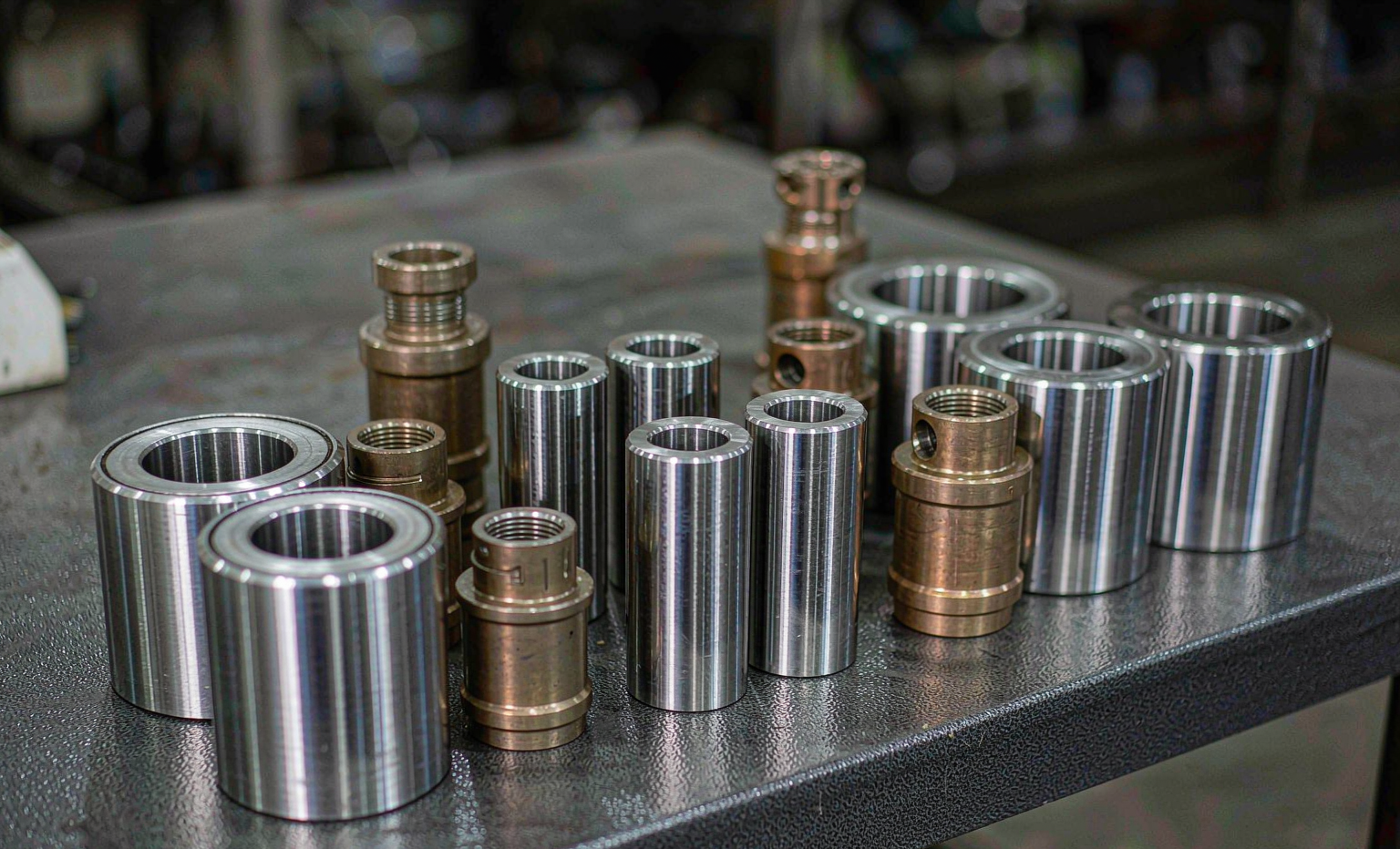
40Cr and 42CrMo are the two grades Chinese bucket pin suppliers quote most often, and the price gap between them is small enough that most buyers choose on price alone. That is the wrong variable. The two grades fail differently, and the failure mode that ends a bucket pin's life is almost never low surface hardness.
Both grades harden to roughly the same surface hardness. What separates them is how they behave under that surface, which is where ovalised bores and snapped pins actually begin.
What each grade actually is
Both are Chinese GB/T 3077 alloy structural steels, and both have close Western equivalents:
- 40Cr — around 0.40% carbon with roughly 1% chromium. Closest common equivalent is AISI 5140. A general-purpose through-hardening steel, widely available and cheap.
- 42CrMo — around 0.42% carbon, roughly 1% chromium plus about 0.2% molybdenum. Closest common equivalent is AISI 4140. The molybdenum is the whole point of the grade.
Neither is exotic. Neither is a "premium" material in any meaningful sense. The difference is metallurgical and it is specific.
The real difference is hardenability, not hardness
Bucket pins are usually induction hardened on the bearing surface after machining, targeting somewhere around 50–58 HRC at the surface with a case a few millimetres deep. Both grades will hit that surface number on a good day. Hardness is the easy part.
The hard part is the core. When a pin is quenched, the outer layer cools fast and the centre cools slowly. Molybdenum in 42CrMo slows the phase transformation enough that thicker sections still harden through and temper stably. 40Cr in a large diameter can end up with a soft, tough core under a hard skin — and that combination is exactly what produces the two failures buyers complain about most:
- Ovalised bore and bent pin. A soft core deflects under load, the pin bends, and the load concentrates on one edge of the bushing instead of spreading across the bearing area.
- Case crushing. A hard but thin case sitting on a core that yields will crack and spall, because it has nothing behind it to hold it up.
This is why a 40Cr pin and a 42CrMo pin can both test at 55 HRC on the surface and still last very different lengths of time in the same machine.
When 42CrMo is worth the extra cost
The grade upgrade pays for itself in three situations:
- Large pin diameters. Above roughly 60–70 mm, the section is thick enough that 40Cr hardenability becomes the limiting factor rather than the load itself.
- Shock loading. Hydraulic breakers, rock buckets, rippers and anything that transmits impact rather than steady digging force. Toughness in the core is what survives impact.
- Continuous production duty. A machine running two shifts is not the same application as one running a few hours a week, even at the same tonnage.
For a mini excavator doing light trenching, 40Cr is a perfectly reasonable specification and paying for 42CrMo buys little. C45 / 1045 carbon steel is also common in that class and performs acceptably when the pin is generously sized.
Case depth and geometry matter more than the grade
In practice, more premature pin failures trace back to process than to material choice. When you specify a pin, these three items deserve as much attention as the grade:
- Case depth. Too thin and the case crushes under edge loading. Too deep and the pin becomes brittle with no tough core left to absorb shock. It should be matched to the pin diameter and the duty.
- Surface finish in the bearing zone. A rough bearing surface destroys the bushing bore and accelerates clearance growth regardless of what steel it is made from.
- Lubrication path. Cross-drilled holes, grease grooves and correct chamfers. A pin that cannot be greased properly will fail on schedule, and no grade selection will rescue it.
These are manufacturing decisions rather than catalogue items, so they have to be asked for explicitly. Most quotations will not volunteer them.
How to check what you were actually sold
Grade substitution is one of the most common problems in aftermarket pin supply, and it is not difficult to detect if you ask for the right documents:
- Mill certificate (MTC) with full chemistry. Check chromium and molybdenum. Steel sold as 42CrMo with no molybdenum reading is not 42CrMo.
- Hardness at two depths. Surface hardness is easy to fake or to achieve accidentally. A core hardness reading on a sectioned sample is much harder to dress up.
- Dimensional check on the bearing diameter and ovality. Cheap to do on arrival and it catches poor machining before the pin is fitted.
- Crack detection on large pins. Magnetic particle inspection on high-value pins is worth the cost before they go into a machine.
A spark test on a grinder is a rough field indicator at best, and it will not reliably separate 40Cr from 42CrMo. Do not let it stand in for a mill certificate.
What to specify, in short
- Mini excavators up to about 5 tonnes: 40Cr or C45 is usually adequate. Spend the money on case depth and finish instead.
- 20–30 tonne class: specify 42CrMo for the bucket pins, particularly the bucket-to-link pin, which sees the highest combined bending and shock.
- Breakers, rock buckets and impact work: 42CrMo, and ask for the toughness-oriented temper rather than maximum hardness.
- Any large diameter pin: 42CrMo, because 40Cr hardenability will limit you before the load does.
The grade is a starting point, not a guarantee. A 42CrMo pin with a 1 mm case and no lubrication path will still fail before a well-made 40Cr pin in a light application.
If you are replacing pins and want to check the right diameter and configuration for your machine, our bucket pin range covers sizes from 25 mm upward, and the bucket bushings that pair with them. Sizing examples are on the 40 mm pin and 80 mm pin pages.
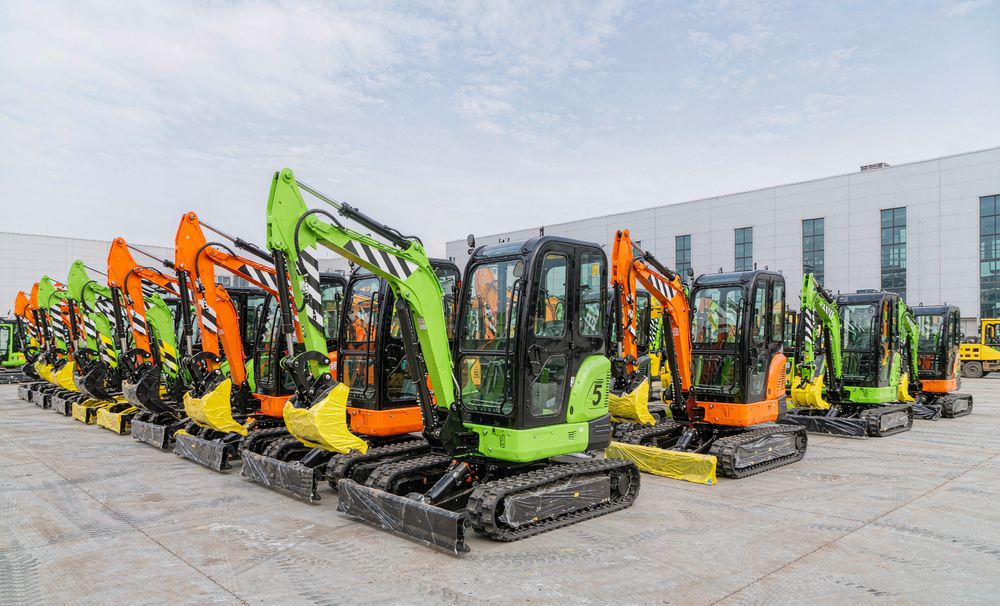
,000 went viral in Norway this autumn, and behind that video sits hard data: construction machinery exports reached US.373 billion in the first half of 2026, up 21.7 percent year on year according to the China Construction Machinery Association, with compact equipment and micro excavators driving the fastest growth.
What do the H1 2026 export numbers show?
The headline figures reported by Chinese state media in late October, drawn from industry association statistics: excavator exports exceeded domestic sales for the eighth consecutive month, and cumulative excavator exports passed 85,000 units in the first seven months of 2026, up more than 31 percent year on year. Exports to the European Union reached US.626 billion, up 28.9 percent. Industry forecasts put China's compact construction machinery sales for 2026 above 180,000 units, with micro excavators making up more than 60 percent of that, roughly 110,000 machines. Trade commentary attributes the shift to buyers outside the traditional channel: private owners, small farms and tradespeople in Europe and South America discovering these machines through social media and cross-border e-commerce rather than dealer networks.
Why does this matter to parts buyers?
Because every one of those machines is a compact wear-parts consumer. A 1 to 3 tonne excavator still runs bucket pins and bushings, teeth, track rollers and sprockets; it just runs them at smaller envelopes and tighter tolerances than a 20 tonne machine. The parts market for this segment behaves differently from the large-machine market in three ways:
- Volumes are high and per-unit margins are thin, so parts supply consolidates around the same Shandong manufacturing clusters that build the machines.
- Many compact machines are sold direct to first-time owners, so sourcing spare parts is often the owner's first experience with the brand. A parts page that does not answer "which pin fits my machine" loses that buyer instantly.
- Fleet-scale after-sales networks, the normal channel for 20 tonne iron, barely exist for micro machines, which pushes owners toward online parts suppliers and pushes suppliers toward clear part-number discipline.
What does this mean for a Shandong parts maker?
JALE Excavator Parts is a Shandong manufacturer of excavator wear parts, and it sits inside the same industrial cluster that is shipping these machines. Unlike most parts suppliers, it also builds its own compact range, including the JALE08, JALE10-1 and JALE12 mini excavators, so the fit between a small machine and its pins, bushings and undercarriage parts is designed rather than reverse-engineered.
Do compact machines need different parts discipline?
The wear parts are the same families, but the failure pattern is not. A micro excavator's pins and bushings are physically smaller, so a few tenths of a millimetre of wear is a larger share of the original clearance, and the symptoms, play at the bucket ear, grease that will not hold, a knocking sound on direction change, arrive sooner relative to machine hours. Owners who would never inspect a 20 tonne machine weekly can and should walk around a 1 tonne machine weekly: two grease strokes per pin, a visual check that the bucket ears have not bell-mouthed, and a feel for slop at the linkage. The parts themselves are cheap; the deciding factor is knowing the pin diameter and ear spacing before ordering, because a 25 mm and a 30 mm pin look identical in a photo.
One honest caveat: no association figures have been published for compact-segment parts demand specifically, so any claim about its size would be guesswork. What the export data does establish is the installed base: over 100,000 micro and compact machines a year are entering service, largely with owners who have no dealer relationship. Their pins, bushings and teeth will be replaced on wear, on the owner's budget, from whichever supplier answers first with the right dimensions. That is the market segment forming behind the headline number, and it buys the same discipline this site has always sold: correct part numbers, honest steel grades, and hardware that fits the first time.
,000 went viral in Norway this autumn, and behind that video sits hard data: construction machinery exports reached US.373 billion in the first half of 2026, up 21.7 percent year on year according to the China Construction Machinery Association, with compact equipment and micro excavators driving the fastest growth.
What do the H1 2026 export numbers show?
The headline figures reported by Chinese state media in late October, drawn from industry association statistics: excavator exports exceeded domestic sales for the eighth consecutive month, and cumulative excavator exports passed 85,000 units in the first seven months of 2026, up more than 31 percent year on year. Exports to the European Union reached US.626 billion, up 28.9 percent. Industry forecasts put China's compact construction machinery sales for 2026 above 180,000 units, with micro excavators making up more than 60 percent of that, roughly 110,000 machines. Trade commentary attributes the shift to buyers outside the traditional channel: private owners, small farms and tradespeople in Europe and South America discovering these machines through social media and cross-border e-commerce rather than dealer networks.
Why does this matter to parts buyers?
Because every one of those machines is a compact wear-parts consumer. A 1 to 3 tonne excavator still runs bucket pins and bushings, teeth, track rollers and sprockets; it just runs them at smaller envelopes and tighter tolerances than a 20 tonne machine. The parts market for this segment behaves differently from the large-machine market in three ways:
- Volumes are high and per-unit margins are thin, so parts supply consolidates around the same Shandong manufacturing clusters that build the machines.
- Many compact machines are sold direct to first-time owners, so sourcing spare parts is often the owner's first experience with the brand. A parts page that does not answer "which pin fits my machine" loses that buyer instantly.
- Fleet-scale after-sales networks, the normal channel for 20 tonne iron, barely exist for micro machines, which pushes owners toward online parts suppliers and pushes suppliers toward clear part-number discipline.
What does this mean for a Shandong parts maker?
JALE Excavator Parts is a Shandong manufacturer of excavator wear parts, and it sits inside the same industrial cluster that is shipping these machines. Unlike most parts suppliers, it also builds its own compact range, including the JALE08 and JALE12 mini excavators, so the fit between a small machine and its pins, bushings and undercarriage parts is designed rather than reverse-engineered.
Do compact machines need different parts discipline?
The wear parts are the same families, but the failure pattern is not. A micro excavator's pins and bushings are physically smaller, so a few tenths of a millimetre of wear is a larger share of the original clearance, and the symptoms, play at the bucket ear, grease that will not hold, a knocking sound on direction change, arrive sooner relative to machine hours. Owners who would never inspect a 20 tonne machine weekly can and should walk around a 1 tonne machine weekly: two grease strokes per pin, a visual check that the bucket ears have not bell-mouthed, and a feel for slop at the linkage. The parts themselves are cheap; the deciding factor is knowing the pin diameter and ear spacing before ordering, because a 25 mm and a 30 mm pin look identical in a photo.
One honest caveat: no association figures have been published for compact-segment parts demand specifically, so any claim about its size would be guesswork. What the export data does establish is the installed base: over 100,000 micro and compact machines a year are entering service, largely with owners who have no dealer relationship. Their pins, bushings and teeth will be replaced on wear, on the owner's budget, from whichever supplier answers first with the right dimensions. That is the market segment forming behind the headline number, and it buys the same discipline this site has always sold: correct part numbers, honest steel grades, and hardware that fits the first time.
.31 billion, up 47%, and to Latin America at US.03 billion, up 60.7%. Longer routes make schedule reliability worth more than a few days of inland saving, which is why the port and the carrier matter more than the canal itself.
What it means for a parts order in practice
Production time does not move. Machining, heat treatment and packing run at the same pace whichever port the container leaves from. What a shorter inland leg changes is the buffer a supplier needs between finishing an order and handing it to the carrier, and at the margin how much working capital sits in a container on a truck.
For the buyer, the response is unchanged: plan stock against ocean transit plus clearance, not against the inland leg, and ask for the port and the sailing date rather than a single lead-time number. The parts themselves — bucket pins and bushings, track chains, bucket teeth — are priced by steel grade and machining hours, not by which river they floated down.
.90 billion, up 13.9%; to Europe, US.59 billion, up 4.2%. The growth is elsewhere: Africa at US.31 billion, up 47%, and Latin America at US.03 billion, up 60.7%.
That regional split matters for spare-parts planning. Mature markets in Europe are growing slowly, while the fastest-growing destinations are markets where machines work long hours in abrasive conditions and where the dealer and service network is thinner — exactly the profile that generates high wear-parts consumption. Trade-press analysis attributes a large share of African excavator demand to mining, and mining duty is brutal on undercarriage and on ground-engaging tools.
What should buyers and distributors plan for?
Stock the models that are actually in the field, not the models in the press release. On the evidence of the last few years that means the mainstream 20–30 tonne classes and the household names built around them — PC200 and PC300 class machines, the 320 and 330 class, the EX200 class, the R210 class and the DX225 class — plus the undercarriage groups that fit them. Those are the machines absorbing pins, bushings and track components in volume.
Do not build stock around electric-specific parts yet. At 0.6% penetration there is no volume aftermarket, and the common parts on those machines are the same parts you already carry.
Finally, plan for the replacement cycle, not just the new-machine market. Chinese trade-press analysis puts the domestic replacement cycle at roughly eight years, and with domestic sales now rising on the back of equipment replacement and emission-standard upgrades, a large second and third-owner population of machines is coming into its maintenance-heavy phase. That is the cohort that buys the most wear parts per machine — and it is a diesel cohort.
