
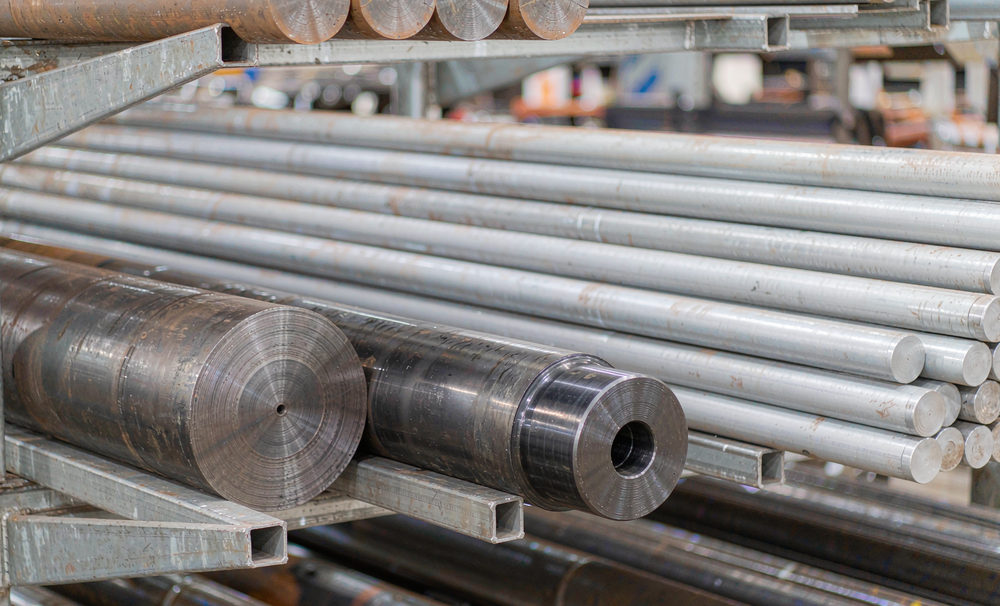
The alloy steels that excavator pins and bushings are made from have been close to flat through early October 2026, so Q4 wear-part pricing is being driven by demand and freight rather than by raw material. Shijiazhuang 40Cr hot-rolled bar in the 20–28 mm range was quoted at 4,440 yuan per tonne on 9 October, down 20 yuan on the day, and Mysteel's Cr alloy round bar index for 40Cr stood at 172.06 on 13 October, down 0.07 — effectively unchanged.
What do the raw material numbers actually say?
Two grades matter most for excavator wear parts. 40Cr is the workhorse through-hardening grade behind bucket pins and many shaft-type parts. 20CrMnTi is the carburising grade used where a hard case over a tough core is wanted. Neither is showing anything like the volatility that dominated 2021 and 2022.
- 40Cr bar, Shijiazhuang, 9 October 2026: 4,440 yuan/t for 20–28 mm hot-rolled, down 20 yuan/t day on day.
- 40Cr index, 13 October 2026: 172.06, down 0.07 — flat.
- 20CrMnTi index, 13 October 2026: 162.06, down 0.03 — flat.
Underneath that flatness the Chinese steel market is running soft on both cost and output. Blast furnace hot metal output was around 2.36 million tonnes per day in mid-October, down slightly month on month, and mill profitability has been weak enough that some producers have taken maintenance outages. Published October forecasts place Shanghai rebar in a range of roughly 3,410–3,510 yuan per tonne, with a softer bias later in the quarter as northern construction winds down for winter.
Why does machine demand matter more than steel price right now?
Because the installed base is growing quickly, and every new machine becomes a parts consumer for a decade or more. Chinese excavator sales totalled 22,717 units in September 2026, up 14.4% year on year, taking the January–September total to 214,274 units, up 23.1%. Loader sales were 12,419 units in September, up 17.9%, and 117,077 units over the nine months, up 24.9%. These figures come from the China Construction Machinery Industry Association.
The export side has been the stronger half. Through August 2026, Chinese excavator export volumes exceeded domestic sales, and the export mix is weighted towards the Middle East, Africa and Latin America. That is exactly the pattern that drives aftermarket wear-part demand: machines leaving the dealer network after the warranty period, maintained locally, needing pins, bushings, teeth and undercarriage on a schedule rather than only on failure.
What does this mean for buyers placing Q4 orders?
- Flat steel is the good news — use it. With the 40Cr and 20CrMnTi indices flat, there is no raw-material reason for a wear-part price to jump this quarter. If a quote moves sharply, ask what specifically moved.
- Freight and routing are the real variable. Red Sea and Gulf routing risk has persisted through the quarter, and rates on Asia–Europe and Asia–Red Sea lanes remain the biggest swing factor in landed cost. Ask for FOB and CIF so you can see the spread.
- Order against maintenance windows, not breakdowns. Sea freight from China to Africa, South America or Europe still runs in weeks. Stocking common pin, bushing and tooth sizes ahead of a planned service is cheaper than paying air freight after a failure.
- Expect the November–December slowdown. Northern Chinese construction activity falls away into winter and some mills cut output. Booking before mid-November avoids the pre-holiday congestion that builds from late December.
Which part categories are most exposed to input cost?
Anything with a high ratio of steel to processing is most sensitive to bar price: pins, bushings, bucket teeth and the heavier undercarriage components such as rollers, idlers and track links. Hydraulic seals are driven more by polymer and elastomer costs, and by the currency of the source market, than by steel.
What should be on the watch list for the rest of the quarter?
Three things. Whether mill maintenance outages in northern China tighten bar supply in November. Whether Red Sea routing normalises enough to pull freight rates back down. And whether the Chinese excavator export run rate holds through Q4 — because that is what determines how much aftermarket demand lands in the regions that buy aftermarket parts rather than OEM.
JALE Excavator Parts manufactures and exports bucket pins, bucket bushings, bucket teeth, hydraulic seals, undercarriage and breaker parts from Shandong, China, and quotes FOB or CIF by destination.