Excavator parts South Africa: what buyers in Gauteng and KwaZulu-Natal actually order
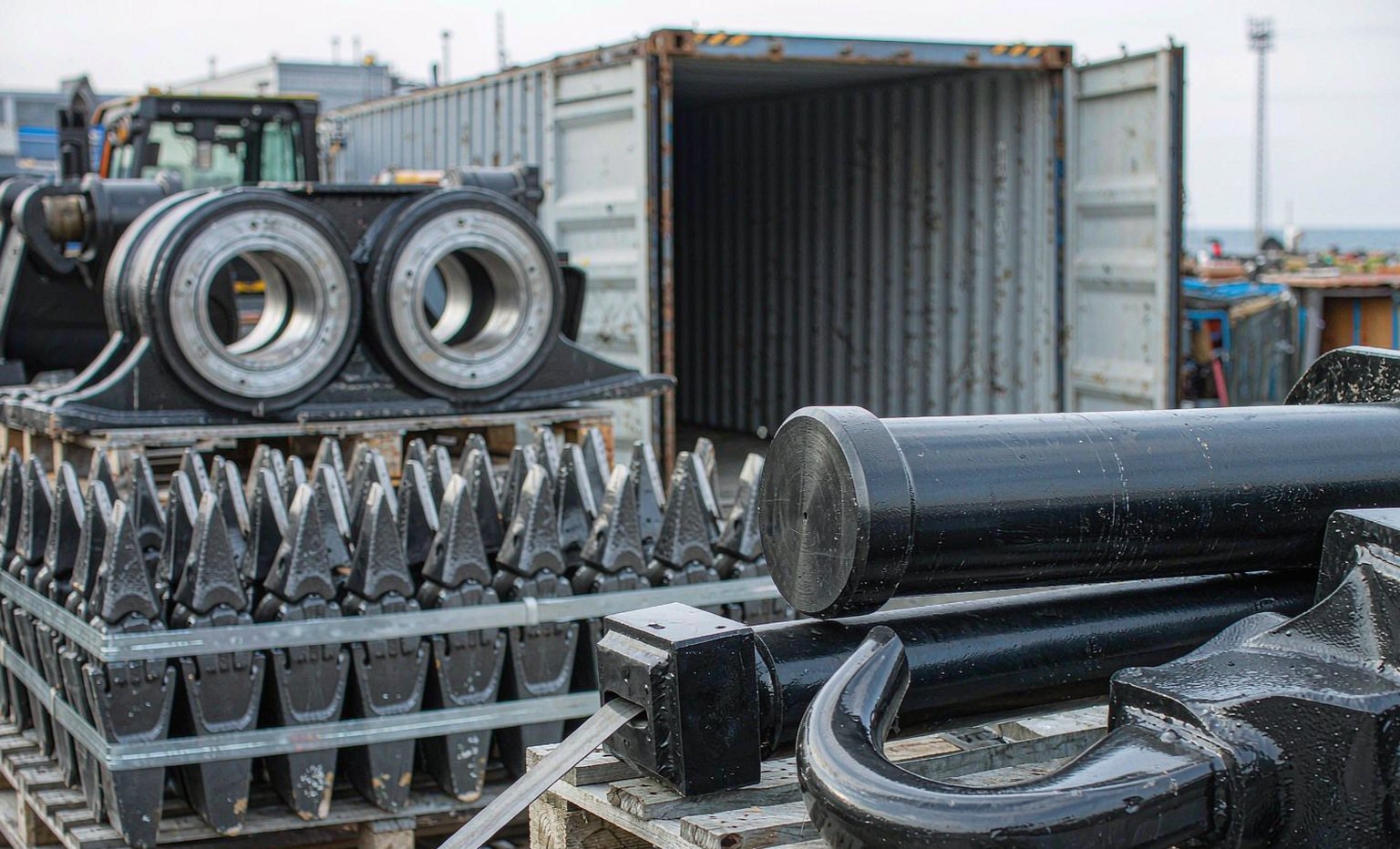
South Africa is not a generic export market. The fleet is dominated by 20-ton class excavators working hard rock, quarry and civils duty, and that combination wears a machine differently from the sand-and-trench work that shapes demand in Europe or the Gulf. If you are building a first parts order for a South African buyer, the duty cycle should decide the list, not the catalogue.
The machine mix sets the stock list
The models that turn up again and again in Gauteng, Mpumalanga and KwaZulu-Natal are the familiar 20 to 30 ton platforms: Caterpillar 320 and 330, Komatsu PC200 and PC300, Hitachi ZX200 and ZX330, Volvo EC210 and EC240, Doosan DX225, Hyundai R220 and Kobelco SK200. Chinese-built machines from Sany and XCMG are a growing share of new fleet, particularly in plant hire.
That matters because pin and bushing sizes are not consistent across those families. A 70 mm pin on one brand is a 75 mm pin on another, and the boss width differs too. Stocking "20-ton pins" as a category is how a first shipment ends up half unusable.
Hard rock duty changes the wear pattern
Quarry and hard rock work loads the front end far harder than trenching. The consequences are predictable:
- Bucket pins and bushings wear faster at the bucket-to-link joint than anywhere else, because that joint sees the highest combined bending and shock.
- Bucket teeth and adapters wear on the tip and loosen on the adapter nose; a worn adapter destroys new teeth quickly.
- Cutting edges and wear plates take abrasive wear from quartz-heavy ground.
- Undercarriage wears on the rollers and idlers before the chain stretches, particularly on machines working on shot rock rather than soil.
A first order weighted toward these consumables moves faster than one weighted toward engine and hydraulic components, which buyers prefer to source locally for warranty reasons.
The sizing traps that cost a container
Three details account for most of the fitment complaints from this market:
- Pin diameter versus pin length. Both need to be right. A pin that is 2 mm short will not take the retainer and will walk out under load.
- Thread standards. Hydraulic fittings on European and Japanese machines in the region mix BSP, JIC and metric. Sending the wrong one converts a hose into scrap.
- Weld-on adapter dimensions. Tooth adapters are matched to the bucket lip thickness and the nose series, not to the machine model.
The cheapest way to avoid all three is a photograph with a rule held against the part, plus the OEM part number where the buyer has one. It costs the buyer ten minutes and saves a shipment.
Shipping and consolidation
Sea freight from Qingdao or Shanghai to Durban runs on a five to seven week schedule door to door once booking, loading and clearance are counted. Parts are dense and heavy relative to their value, so freight is a real share of landed cost and consolidation is where the money is:
- LCL suits a first order or a mixed pallet of pins, bushings and teeth. Expect to pay by volume and to wait for a consolidated sailing.
- FCL pays from roughly 15 to 18 cubic metres upward, especially for undercarriage components, which cube out fast.
- Pallet discipline matters more than people think: steel parts strapped to a standard pallet, sealed against moisture, with the packing list on the outside, clears faster than a loose-loaded container.
Declare the goods accurately. Parts classified under the wrong heading attract the wrong duty and hold up clearance, and the classification depends on what the part is, not what it fits.
Counterfeit and "will-fit" parts
The South African market has a long history of grey-import wear parts, and buyers are rightly cautious. The defence is documentation rather than price: a mill certificate with chemistry for pins and bushings, a hardness reading at two depths rather than one, and a dimensional check on arrival. Heat treatment is where cheap pins fail, and it is invisible until the pin bends.
Building the first order
The pattern that works is a small, mixed first order that proves fitment on two or three machines, followed by a consolidated repeat once the buyer knows which sizes actually move. Our South Africa service page covers the shipping side, and the undercarriage parts, bucket bushing and breaker parts ranges show what is normally held for this duty. Send a machine list with pin diameters and we will map the sizes before anything is packed.
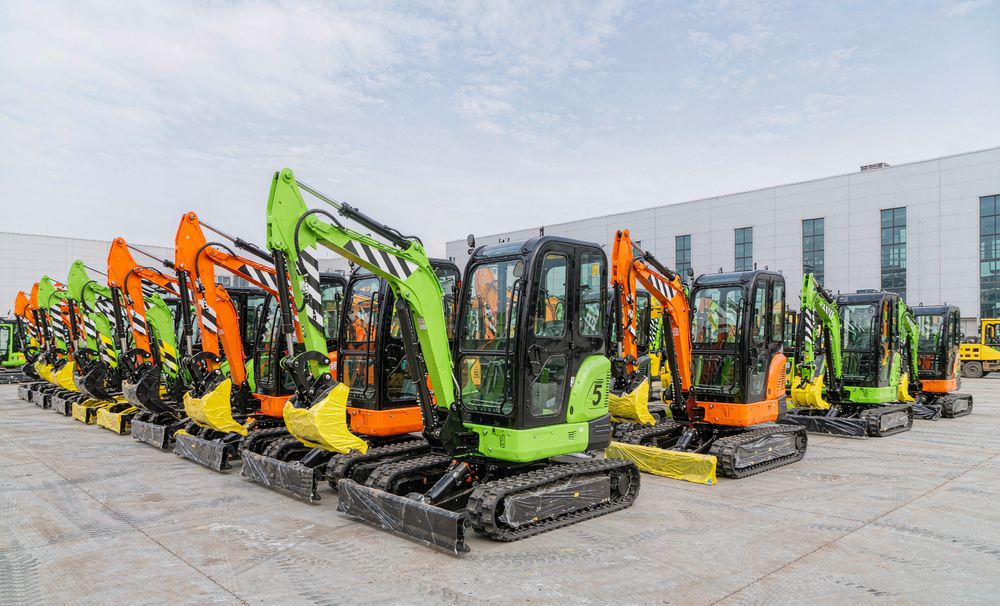
,000 went viral in Norway this autumn, and behind that video sits hard data: construction machinery exports reached US.373 billion in the first half of 2026, up 21.7 percent year on year according to the China Construction Machinery Association, with compact equipment and micro excavators driving the fastest growth.
What do the H1 2026 export numbers show?
The headline figures reported by Chinese state media in late October, drawn from industry association statistics: excavator exports exceeded domestic sales for the eighth consecutive month, and cumulative excavator exports passed 85,000 units in the first seven months of 2026, up more than 31 percent year on year. Exports to the European Union reached US.626 billion, up 28.9 percent. Industry forecasts put China's compact construction machinery sales for 2026 above 180,000 units, with micro excavators making up more than 60 percent of that, roughly 110,000 machines. Trade commentary attributes the shift to buyers outside the traditional channel: private owners, small farms and tradespeople in Europe and South America discovering these machines through social media and cross-border e-commerce rather than dealer networks.
Why does this matter to parts buyers?
Because every one of those machines is a compact wear-parts consumer. A 1 to 3 tonne excavator still runs bucket pins and bushings, teeth, track rollers and sprockets; it just runs them at smaller envelopes and tighter tolerances than a 20 tonne machine. The parts market for this segment behaves differently from the large-machine market in three ways:
- Volumes are high and per-unit margins are thin, so parts supply consolidates around the same Shandong manufacturing clusters that build the machines.
- Many compact machines are sold direct to first-time owners, so sourcing spare parts is often the owner's first experience with the brand. A parts page that does not answer "which pin fits my machine" loses that buyer instantly.
- Fleet-scale after-sales networks, the normal channel for 20 tonne iron, barely exist for micro machines, which pushes owners toward online parts suppliers and pushes suppliers toward clear part-number discipline.
What does this mean for a Shandong parts maker?
JALE Excavator Parts is a Shandong manufacturer of excavator wear parts, and it sits inside the same industrial cluster that is shipping these machines. Unlike most parts suppliers, it also builds its own compact range, including the JALE08, JALE10-1 and JALE12 mini excavators, so the fit between a small machine and its pins, bushings and undercarriage parts is designed rather than reverse-engineered.
Do compact machines need different parts discipline?
The wear parts are the same families, but the failure pattern is not. A micro excavator's pins and bushings are physically smaller, so a few tenths of a millimetre of wear is a larger share of the original clearance, and the symptoms, play at the bucket ear, grease that will not hold, a knocking sound on direction change, arrive sooner relative to machine hours. Owners who would never inspect a 20 tonne machine weekly can and should walk around a 1 tonne machine weekly: two grease strokes per pin, a visual check that the bucket ears have not bell-mouthed, and a feel for slop at the linkage. The parts themselves are cheap; the deciding factor is knowing the pin diameter and ear spacing before ordering, because a 25 mm and a 30 mm pin look identical in a photo.
One honest caveat: no association figures have been published for compact-segment parts demand specifically, so any claim about its size would be guesswork. What the export data does establish is the installed base: over 100,000 micro and compact machines a year are entering service, largely with owners who have no dealer relationship. Their pins, bushings and teeth will be replaced on wear, on the owner's budget, from whichever supplier answers first with the right dimensions. That is the market segment forming behind the headline number, and it buys the same discipline this site has always sold: correct part numbers, honest steel grades, and hardware that fits the first time.
,000 went viral in Norway this autumn, and behind that video sits hard data: construction machinery exports reached US.373 billion in the first half of 2026, up 21.7 percent year on year according to the China Construction Machinery Association, with compact equipment and micro excavators driving the fastest growth.
What do the H1 2026 export numbers show?
The headline figures reported by Chinese state media in late October, drawn from industry association statistics: excavator exports exceeded domestic sales for the eighth consecutive month, and cumulative excavator exports passed 85,000 units in the first seven months of 2026, up more than 31 percent year on year. Exports to the European Union reached US.626 billion, up 28.9 percent. Industry forecasts put China's compact construction machinery sales for 2026 above 180,000 units, with micro excavators making up more than 60 percent of that, roughly 110,000 machines. Trade commentary attributes the shift to buyers outside the traditional channel: private owners, small farms and tradespeople in Europe and South America discovering these machines through social media and cross-border e-commerce rather than dealer networks.
Why does this matter to parts buyers?
Because every one of those machines is a compact wear-parts consumer. A 1 to 3 tonne excavator still runs bucket pins and bushings, teeth, track rollers and sprockets; it just runs them at smaller envelopes and tighter tolerances than a 20 tonne machine. The parts market for this segment behaves differently from the large-machine market in three ways:
- Volumes are high and per-unit margins are thin, so parts supply consolidates around the same Shandong manufacturing clusters that build the machines.
- Many compact machines are sold direct to first-time owners, so sourcing spare parts is often the owner's first experience with the brand. A parts page that does not answer "which pin fits my machine" loses that buyer instantly.
- Fleet-scale after-sales networks, the normal channel for 20 tonne iron, barely exist for micro machines, which pushes owners toward online parts suppliers and pushes suppliers toward clear part-number discipline.
What does this mean for a Shandong parts maker?
JALE Excavator Parts is a Shandong manufacturer of excavator wear parts, and it sits inside the same industrial cluster that is shipping these machines. Unlike most parts suppliers, it also builds its own compact range, including the JALE08 and JALE12 mini excavators, so the fit between a small machine and its pins, bushings and undercarriage parts is designed rather than reverse-engineered.
Do compact machines need different parts discipline?
The wear parts are the same families, but the failure pattern is not. A micro excavator's pins and bushings are physically smaller, so a few tenths of a millimetre of wear is a larger share of the original clearance, and the symptoms, play at the bucket ear, grease that will not hold, a knocking sound on direction change, arrive sooner relative to machine hours. Owners who would never inspect a 20 tonne machine weekly can and should walk around a 1 tonne machine weekly: two grease strokes per pin, a visual check that the bucket ears have not bell-mouthed, and a feel for slop at the linkage. The parts themselves are cheap; the deciding factor is knowing the pin diameter and ear spacing before ordering, because a 25 mm and a 30 mm pin look identical in a photo.
One honest caveat: no association figures have been published for compact-segment parts demand specifically, so any claim about its size would be guesswork. What the export data does establish is the installed base: over 100,000 micro and compact machines a year are entering service, largely with owners who have no dealer relationship. Their pins, bushings and teeth will be replaced on wear, on the owner's budget, from whichever supplier answers first with the right dimensions. That is the market segment forming behind the headline number, and it buys the same discipline this site has always sold: correct part numbers, honest steel grades, and hardware that fits the first time.
.31 billion, up 47%, and to Latin America at US.03 billion, up 60.7%. Longer routes make schedule reliability worth more than a few days of inland saving, which is why the port and the carrier matter more than the canal itself.
What it means for a parts order in practice
Production time does not move. Machining, heat treatment and packing run at the same pace whichever port the container leaves from. What a shorter inland leg changes is the buffer a supplier needs between finishing an order and handing it to the carrier, and at the margin how much working capital sits in a container on a truck.
For the buyer, the response is unchanged: plan stock against ocean transit plus clearance, not against the inland leg, and ask for the port and the sailing date rather than a single lead-time number. The parts themselves — bucket pins and bushings, track chains, bucket teeth — are priced by steel grade and machining hours, not by which river they floated down.
.90 billion, up 13.9%; to Europe, US.59 billion, up 4.2%. The growth is elsewhere: Africa at US.31 billion, up 47%, and Latin America at US.03 billion, up 60.7%.
That regional split matters for spare-parts planning. Mature markets in Europe are growing slowly, while the fastest-growing destinations are markets where machines work long hours in abrasive conditions and where the dealer and service network is thinner — exactly the profile that generates high wear-parts consumption. Trade-press analysis attributes a large share of African excavator demand to mining, and mining duty is brutal on undercarriage and on ground-engaging tools.
What should buyers and distributors plan for?
Stock the models that are actually in the field, not the models in the press release. On the evidence of the last few years that means the mainstream 20–30 tonne classes and the household names built around them — PC200 and PC300 class machines, the 320 and 330 class, the EX200 class, the R210 class and the DX225 class — plus the undercarriage groups that fit them. Those are the machines absorbing pins, bushings and track components in volume.
Do not build stock around electric-specific parts yet. At 0.6% penetration there is no volume aftermarket, and the common parts on those machines are the same parts you already carry.
Finally, plan for the replacement cycle, not just the new-machine market. Chinese trade-press analysis puts the domestic replacement cycle at roughly eight years, and with domestic sales now rising on the back of equipment replacement and emission-standard upgrades, a large second and third-owner population of machines is coming into its maintenance-heavy phase. That is the cohort that buys the most wear parts per machine — and it is a diesel cohort.
